Cold Email Follow Up: How Many to Send, When, and What to Say
Cold Email
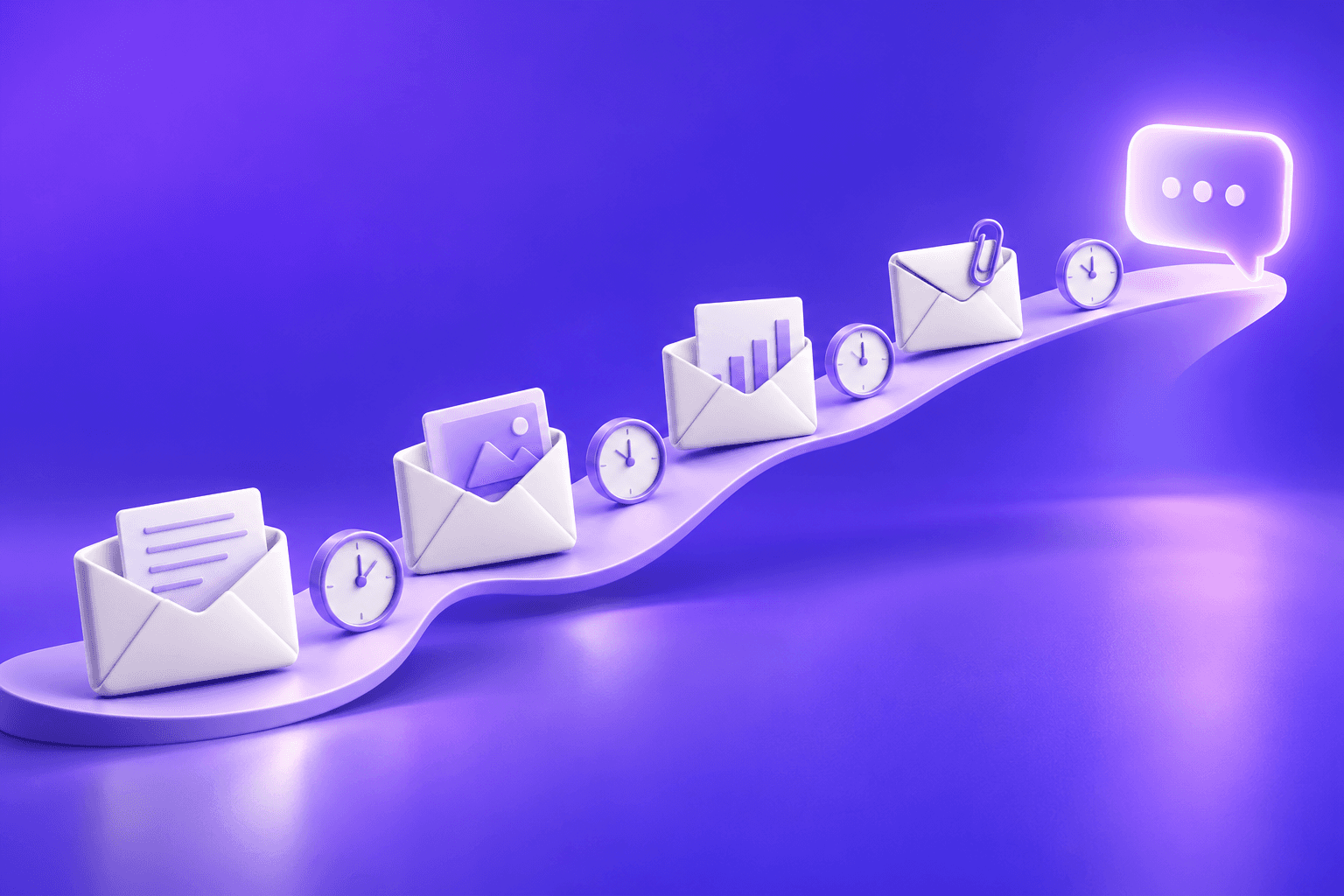
Send four to six emails in a cold email sequence, spaced three to four days apart at first and a week apart later. Follow ups produce around 42 percent of all replies, so stopping after one email throws away almost half your results. Every follow up must add something new, never just check in.
Most campaigns are judged on the first email and abandoned by the second, which makes the cold email follow up the most wasted opportunity in outbound. In Instantly’s 2026 Cold Email Benchmark Report, the first email produced 58 percent of replies and the follow ups produced the other 42 percent. A campaign that stops after one message discards nearly half of the conversations it paid to start.
The opposite mistake is just as common: six identical nudges asking whether the prospect saw the last email. That does not add replies. It adds unsubscribes and spam complaints, which damage the domain every future campaign depends on.
This guide covers the follow up that sits between those two: how many to send, when to send them, what each one should say, and how to stay within deliverability limits and European law.
Why follow ups matter more than the first email suggests
Put the 58 and 42 percent split into numbers. If a first email produces 29 replies from 1,000 prospects, a well built sequence should add roughly another 21 over the following weeks, taking the campaign to around 50. The people who reply to email four are not less interested than those who reply to email one. Most were busy, travelling or not yet feeling the problem when the first email arrived.
Instantly also notes that replies keep arriving beyond the tenth step, at much lower rates. Readiness comes at different moments for different people. A sequence is simply a way of being present at more of those moments without becoming noise.
How many cold email follow ups should you send?
Four to six emails in total for an email only sequence, which means three to five follow ups after the first. Instantly puts the sweet spot at four to seven touchpoints: fewer than four gives up too early, and beyond seven the returns diminish unless each touch brings something genuinely new.
The right number moves with the market and the channel mix:
Large markets with broad lists can run the full six, because losing a single account costs little.
Small markets with few accounts deserve fewer and better emails. Norway is the obvious Nordic example: when your whole market is 400 companies, a burned account is not replaceable.
Multi channel sequences need fewer emails, because a LinkedIn touch or a call carries part of the load.
High value accounts justify more research per touch, not more touches.
There is also a hard limit that has nothing to do with reply rates. Every follow up is another send against the daily limits of your mailboxes and another chance to be reported as spam. Google’s email sender guidelines ask senders to keep their reported spam rate below 0.3 percent. Volume you do not need is risk you do not need.
How long to wait between follow ups
Space the early touches three to four days apart, as Instantly recommends, then widen the gap. Momentum matters early, because the prospect may still remember the first email. Later, patience matters, because pressure reads as desperation.
Touch | Day | Channel | Angle |
|---|---|---|---|
Email 1 | 1 | The observation, the implication and one question | |
Email 2 | 4 | Email, same thread | A short reply to your own message |
6 | View the profile or connect, with no pitch | ||
Email 3 | 8 | Email, same thread | Proof: a result, a client or a number |
Email 4 | 14 | Email, new thread | A different problem or a different stakeholder |
Call | 15 to 17 | Phone, where lawful | A short call that references the emails |
Email 5 | 21 | Something useful with no ask attached | |
Email 6 | 30 to 35 | Close the loop politely |
Two timing details matter as much as the gaps. Instantly’s data shows Wednesday as the peak day for engagement, Monday as the natural day to launch and Friday as the day automatic replies flood in. And in the Nordics the calendar matters more than the weekday. A sequence that runs into July in Sweden, Norway or Finland is a sequence sent to empty offices, so pause it at midsummer and resume in August. The same applies to the stretch between mid December and early January across Europe.
What to say in each cold email follow up
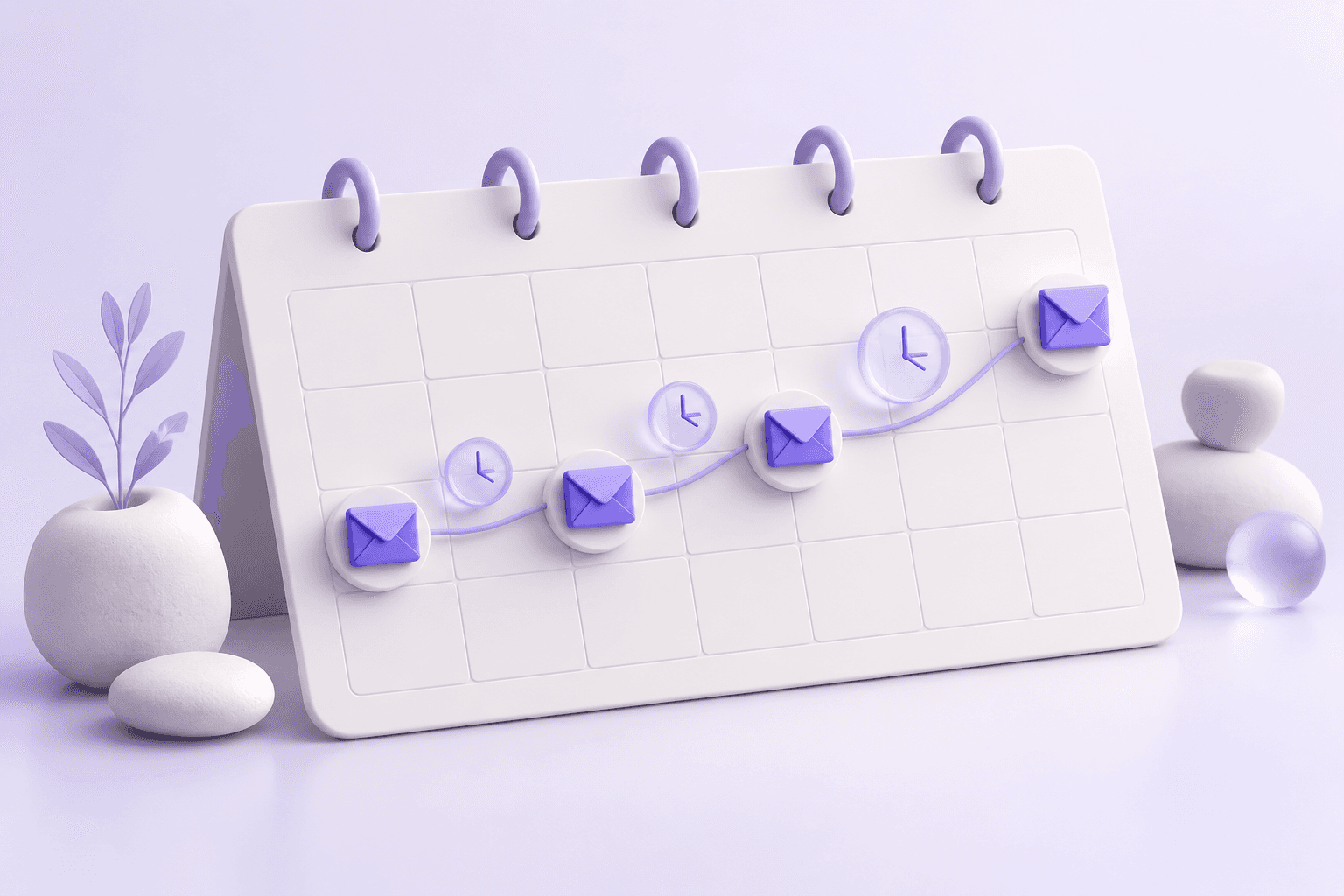
Every follow up needs a reason to exist that the previous email did not already cover. The simplest way to guarantee that is to plan the angles before writing a word.
Email 2: the reply that feels like a reply
Short, in the same thread, and written like a person bumping their own message. Instantly found that a second step written as a casual reply to the first performs around 30 percent better than a formal follow up.
Email 3: the proof
Now you can show evidence: a client in the same segment, a before and after number, a sentence about how long it took. One proof point, not a case study.
Email 4: the different door
Either a different problem you solve for the same person, or the same problem framed for a different stakeholder. Many sequences fail because the first angle was wrong, not because the prospect was uninterested. This is also the natural point to start a new thread with a new subject line.
Email 5: the useful thing
A benchmark, a short teardown, a relevant article or a data point about their market. No ask. This is the email that makes the next conversation warmer even when it gets no reply.
Email 6: the close
A polite end that makes replying easy. Not a guilt trip and not a fake deadline. Tell them you will stop, and give them a simple way to point you to the right person or the right time.

Follow up email after no response: six examples
These continue the thread from the first example in our guide to writing a B2B cold email. Names are illustrative. Each would end with the same one line opt out as the first email, left out here to keep them short.
Email 2: the bump
Hi Sara,
Bumping this with an easier question than my first one. Is outbound on your plate this quarter, or should I leave it?
Jonas
Email 3: the proof
Hi Sara,
One data point that may be useful: a 40 person SaaS company in Stockholm booked 14 qualified meetings in its first eight weeks after we took over its outbound. Happy to share how, if relevant.
Jonas
Email 4: the different door
Subject: sales and marketing numbers
Hi Sara,
A different angle. If pipeline is fine, the other thing we often hear from new marketing leaders is that sales and marketing report different numbers for the same funnel. Is that closer to home?
Jonas
Email 5: the useful thing
Hi Sara,
No ask in this one. Three things Nordic SaaS companies tell us they learned from their first outbound hire: hire for writing ability, give the role its own sending domains from day one, and expect three months before the numbers settle. It may help when you plan the role.
Jonas
Email 6: the close
Hi Sara,
I will stop here so this does not become noise in your inbox. If outbound becomes a priority later, or someone else owns it, a one line reply is all I need.
Jonas
After an out of office reply
Hi Sara,
Hope the time away went well. Picking up my note from earlier this month, since it may be more relevant now that you are back: is outbound part of the plan for next quarter?
Jonas
Adding LinkedIn and phone to the sequence
Email carries most sequences, but it rarely needs to carry them alone. A profile view or a connection request with no pitch, placed between emails two and three, means the prospect has seen your name before email three lands. A short call after email four often reaches people who never answer email at all.
Two cautions. First, LinkedIn’s User Agreement prohibits bots and other unauthorised automation for adding contacts or sending messages, and a restricted account is expensive to rebuild. Second, the law follows the message, not the platform. In Denmark, private marketing messages on social media fall under the same consent rule as email, and calls to businesses need prior consent in Austria and at least presumed consent in Germany. Our guide to whether cold email is legal in Europe sets out what is allowed where.
What not to do in a follow up
“Just checking in.” It tells the prospect you have nothing new to say.
Guilt and pressure. “I have tried to reach you several times” is a complaint, not a reason to reply.
Fake urgency. Deadlines that do not exist are spotted immediately and remembered.
A new subject line on every email. Keep early follow ups in the same thread so the context travels with them.
The calendar link in every email. Offer it once someone shows interest.
Continuing after any reply. A reply of any kind, including “no”, ends the automated sequence. Everything after that is a conversation.
Ignoring an objection. An opt out must be honoured immediately and permanently. Under Article 21 of the GDPR, once someone objects to direct marketing, their data may no longer be processed for that purpose.
Threading, out of office replies and when to stop
Keep emails two and three in the same thread as the first, so the prospect sees the original context. Start a new thread when you change angle, usually at email four, with a subject line that matches the new idea.
Stop the sequence the moment anyone replies, including with an automatic reply. Out of office messages usually include a return date: pause and resume a few days after it, rather than sending into an empty inbox. If the automatic reply names a colleague who covers the role, treat it as a referral.
When the sequence ends without a reply, do not restart it next week. Move the contact to a quiet list and wait at least 90 days before a new approach with a new angle. Prospects who reply “not now” need a different process entirely, which is what lead nurturing is for.
How to measure your follow up sequence
Track replies by step, not only in total. Three patterns tell you what to change:
Step one carries almost everything. The follow ups add nothing new. Rewrite them around new angles rather than reminders.
Replies arrive late but are mostly negative. The later emails are creating pressure. Shorten the sequence or soften the close.
One step spikes opt outs or complaints. That email is the problem. Rewrite or remove it before the next campaign.
Also review consistency. Instantly reports that senders who keep domain health stable and send consistently see 15 to 20 percent more replies, which is one more reason to plan the whole sequence before launch instead of improvising follow ups by hand.
The rule for every follow up. Before sending, ask what the prospect learns from this email that they did not know from the last one. If the answer is nothing, the email is a reminder, and reminders are how sequences turn into spam. If the answer is something useful, the follow up is often the email that gets the reply.
Want a sequence like this built and run for you? See what our clients say, or book a call.
Frequently asked questions
How many follow up emails should I send after a cold email?
Three to five follow ups, making four to six emails in total. Instantly’s 2026 benchmark puts the sweet spot at four to seven touchpoints. Send fewer in small markets where every account matters, and fewer again when LinkedIn or phone touches share the load in a multi channel sequence.
How long should I wait before following up on a cold email?
Three to four days for the first follow up, then widen the gaps to a week or more. Early follow ups benefit from momentum, while later ones need patience so they do not read as pressure. Avoid Friday sends, and pause sequences over the Nordic summer and the Christmas holidays.
What should I say in a follow up email after no response?
Something new every time. The first follow up can be a short reply in the same thread. After that, add proof, a different angle or something genuinely useful with no ask. Never send a message whose only content is checking whether they saw the last one.
Should cold email follow ups be in the same thread?
The first two follow ups, yes, so the original context travels with them. When you change angle, usually around the fourth email, start a new thread with a subject line that matches the new idea. Keeping six emails in one thread makes the conversation hard to follow.
When should I stop following up?
After four to six emails without a reply, or immediately after any reply, including a negative one or an opt out. Move non responders to a quiet list and wait at least 90 days before a new approach with a new angle. Prospects who say not now belong in a nurture process.
Do follow up emails hurt deliverability?
They can if they add volume without adding relevance. Every follow up counts against your mailbox limits and gives recipients another chance to report spam, and Google asks senders to keep reported spam below 0.3 percent. Well spaced follow ups that add value rarely cause problems; repetitive nudges often do.
Apply To Partner
With Leadsify.
Schedule a meeting with any of our Regional Directors and let’s chat about scaling your business in 2026.
This is NOT for you if your business:
Is not making at least €100,000/year.
Does not have any case studies.
Is still searching for product-market fit.
This is FOR YOU if you want to:
Scale fast and get new clients predictably.
Save 15+ hours a week from prospecting.
Get 7–35 qualified sales meetings a month.
Expand to new markets.





Trusted by 50+ B2B companies